




Woman holding her head in discomfort, illustrating the effects of untreated hearing loss.

7 consequences of untreated hearing loss

Living with untreated hearing loss

Living with untreated hearing loss affects far more than your ability to hear. You risk that it affects your life in several ways:

  1. Your mental sharpness may decline.
  2. Your risk of dementia may increase.
  3. Your memory can be impaired.
  4. You may feel left out of conversation.
  5. Your social life may be impacted.
  6. You may feel anxious.
  7. You may experience increased mental strain.

You can learn more in detail about each consequence below.

Hearing Loss & Connection

In this video, Dr. Sabina Brennan discusses the impact that hearing has on our relationships and overall well-being.

By addressing hearing loss early, you can preserve those meaningful bonds and enhance your quality of life.

Don't let hearing loss hold you back.


Book appointmentDownload our health guide

Man in a blue shirt contemplating his next chess move outdoors.

1. Your mental sharpness may decline

When you have difficulty hearing what’s going on around you, your mental sharpness may decline. This is due to a reduction of stimulation to the brain, which may impair its ability to process sound and recognise speech.

How’s your hearing?
Take our online hearing test to get an indication of how well you hear.

Online hearing test

Senior woman with short gray hair gazing thoughtfully out of a window while holding the window frame.

2. Your risk of dementia may increase

Living with even a mild case of hearing loss can double your risk of developing dementia. The more severe the case, the greater the risk of cognitive decline.

A moderate case of hearing loss, for example, triples your risk. With a severe case of hearing loss, you’re up to five times more likely to develop dementia. Learn more about the link between hearing loss and dementia:

Dementia and hearing loss

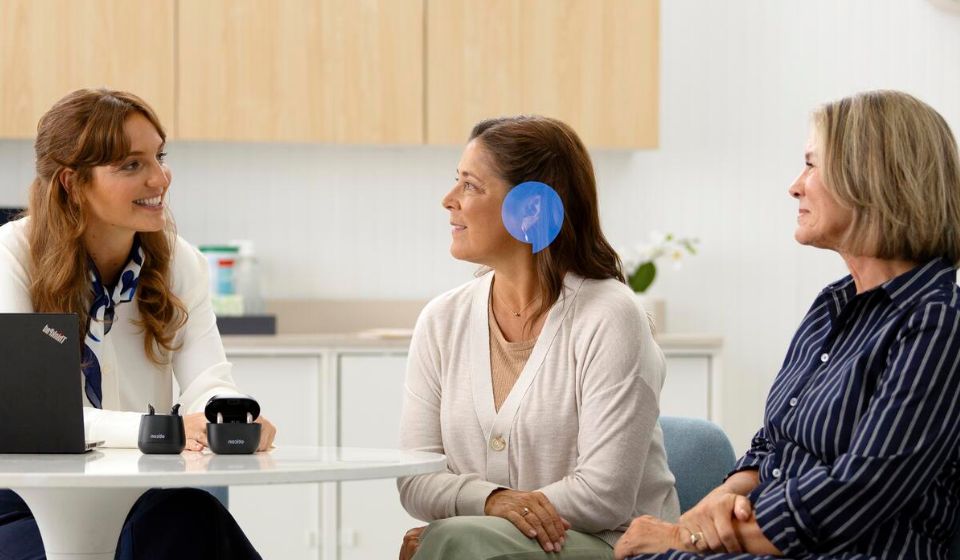
Woman consulting with a hearing care specialist during a hearing test, with hearing devices visible on the table.

Test yourself: Should I get a hearing test?

Answer the 4 questions below to see if you should consider getting a hearing test.

Question 1 – Around the table
Do you have trouble following conversations, when there are 4 or more people present?
Have you received advice from your family or friends to get your hearing tested?
Do you ever struggle to understand what others are saying because you cannot hear properly?
Do you find yourself turning up the TV or radio even when the volume is loud enough for others?

Your Result:

A hearing test is relevant for you

Your answers indicate that you experience symptoms of hearing loss. We strongly recommend booking a hearing test in one of our clinics.

The result is an indication. An in-person hearing test can determine if you have a hearing loss.


Book your free hearing test:

Your Result:

A hearing test seems relevant for you

Your answers indicate that you experience some symptoms of hearing loss. We recommend booking a hearing test in one of our clinics.

The result is an indication. An in-person hearing test can determine if you have a hearing loss.


Book your free hearing test:

Your Result:

It cannot be determined here if a hearing test is relevant for you

Your answers do not indicate that you experience symptoms of hearing loss. However, if you experience trouble hearing, we recommend booking a hearing test in one of our clinics.

The result is an indication. An in-person hearing test can determine if you have a hearing loss.


Book your free hearing test:

Step 1 of 3

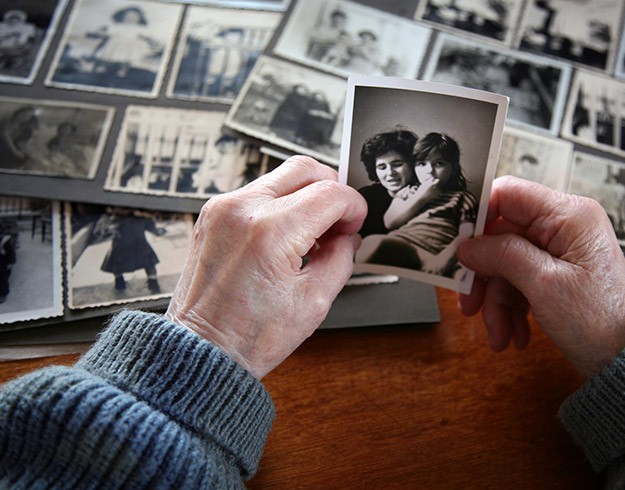
Elderly hands holding a black-and-white photograph, with blurred faces, surrounded by a collection of vintage family photos on a wooden table.

3. Hearing loss may impact your memory

Do you find it hard to remember what you’ve just heard? It can be difficult to comprehend and remember what’s being said when it’s a struggle to hear it in the first place.

This is because the extra cognitive resources required to listen, reduce the resources available for memory and comprehension.

How to get a hearing aid trial in your local clinic

woman with blonde hair holding her head indoors

4. You may feel left out of conversation

As your hearing worsens, it becomes more challenging to follow everyday conversations. You may need to ask people to repeat themselves frequently, or you might sit closer to people so that you can read their lips or watch their facial expressions in order to understand conversations.

You may even nod and pretend to understand what is being said. Jokes aren't as funny if you miss the punchline.

Sensorineural hearing loss

Find a hearing care expert in your area

5. Your social life may be impacted

You may find it harder to keep in touch with your circle of friends when you have difficulty hearing. It may be particularly noticeable in certain settings, such as larger gatherings or dinner parties.

As a result, you may find yourself withdrawing from certain social events or declining invitations. In fact, research shows that seniors with untreated hearing loss are 20-24% less likely to participate in social activities.

Treatment of hearing loss

Mother and daughter enjoying music with headphones, sitting on a couch

6. You may feel anxious

As your hearing ability declines, you may find it difficult to decipher and locate sounds around you. This may lead you to feel more insecure about your surroundings.  

When is the right time to get help

Man touching his head, appearing concerned or in discomfort.

7. You may experience more fatigue

When it’s difficult to hear, communication can be exhausting. This is because you must dig deeper into your cognitive reserves to understand.

This can be particularly taxing at social events, in restaurants or in crowds where you may need to concentrate even harder to decipher what people say to you.

Learn from others with hearing loss

Older woman holding her head while removing glasses, possibly indicating discomfort or frustration.

5 steps to improving your hearing

Senior woman with gray braided hair touching her ear while looking into a mirror.
1. Hearing loss or maybe it's just earwax?
Book earwax removal
Senior woman wearing a modern hearing aid while using a tablet
2. Schedule your FREE hearing test in a clinic near you.
Find your clinic
Senior woman holding a hearing aid
3. Select a pair of hearing aids with a 90-day money back guarantee.
Book a hearing test
elderly person in a striped sweater speaking with a hearing care professional
4. Learn about 2 FREE hearing aids with PRSI grant.
PRSI grant
Elderly woman with long gray hair wearing a brown jacket and a hearing aid, seated outdoors with a green blurred background.
5. Hear well and live well. Receive FREE, unlimited aftercare.
Aftercare service
audiologist female
Written by: Sarah Sheehan, Chief Audiologist, ISHAA Member
Sarah Sheehan is an esteemed member of our HR, L&D and Compliance Department, who joined Hidden Hearing in 2018 as an audiologist. Sarah’s career has seen her work in a wide range of areas within the company and she is committed to providing education about audiology and keeping abreast of current audiology trends.

Last reviewed 2025-07-01

FAQ

Sources

  1. Deal JA, Betz J, Yaffe K, et al, for the Health ABC Study Group. Hearing impairment and incident dementia and cognitive decline in older adults: the Health ABC Study J Gerontol A Biol Sci Med Sci 2016; published online April 12. DOI:10.1093/gerona/glw069. 66
  2. Lin FR, Metter EJ, O’Brien RJ, Resnick SM, Zonderman AB, Ferrucci L. Hearing loss and incident dementia. Arch Neurol 2011; 68: 214–20. 67
  3. Gallacher J, Ilubaera V, Ben-Shlomo Y, et al. Auditory threshold, phonologic demand, and incident dementia. Neurology 2012; 79: 1583–90.
  4. Pichora-Fuller MK. (2008a) quoted in Convention News, “Celebrating 20 Years, AAA is Hear to Stay” from: Advance for Speech-Language Pathologists and Audiologists. By Jason Mosheim, speech-languagepathology-audiology.advance.web.com/editorial.
  5. The National Council on Aging, The Consequences of Untreated Hearing Loss in Older Persons, May 1999. https://www.ncoa.org/wp-content/uploads/NCOA-Study-1999.pdf
  6. Beck DL, Clark, JL. Audition matters more as cognition declines and cognition matters more as audition declines. Audiol-ogy Today. 2009;(3):48-59.
  7. Jung D, Bhattacharyya N. Association of hearing loss with decreased employment and income among adults in the Unit-ed States. Ann Otol Rhinol Laryngol. 2012;121(12):771–775. [PubMed]
  8. Yuan, J., Sun, Y., Sang, S., Pham, J. H., and Kong, W. J. (2018). The risk of cognitive impairment associated with hearing function in older adults: a pooled analysis of data from eleven studies. Sci. Rep. 8:2137. doi: 10.1038/s41598-018-20496-w
  9. Bess, F. H., & Hornsby, B. W. (2014). Commentary: listening can be exhausting--fatigue in children and adults with hearing loss. Ear and hearing, 35(6), 592–599. https://www.ncbi.nlm.nih.gov/pmc/articles/PMC5603232/
  10. Packer, Lisa. "Research shows severity of tinnitus is related to emotional processing." Healthy Hearing. Accessed April 16, 2019.