



audiologist performing an ear examination on an older man

Signs and symptoms of hearing loss

How to recognise the signs of hearing loss and how to act on them.

6 early signs of hearing loss

The signs of hearing loss may develop slowly over time and may be difficult to notice.
Being aware of the signs can help you to be proactive in taking steps to improve your hearing.

Four individuals sit around a wooden table, holding white coffee cups, engaged in a conversation within a bright, casual café setting featuring large windows in the background.
1. Difficulty following conversations
You have difficulty following group conversations (or when background noise is present).
A man holding a phone to his ear while seated indoors
2. Phone conversations are unclear
You have trouble following phone conversations in quiet and noisy places.
A fishmonger holding fresh fish engages with an older man and a woman in a vibrant market setting. The fishmonger wears a blue apron with text saying 'We love what we do.'
3. People seem to be mumbling
You often ask people to repeat themselves or people sound like they are mumbling.
Senior woman with gray hair wearing a hearing aid device.
4. Difficulty locating sounds
You have difficulty locating where sounds are coming from.
A woman experiencing discomfort while holding her temples
5. Signs of tinnitus
You experience ringing or buzzing sounds in your ears.
Elderly couple embracing while relaxing on a couch
6. Turning up the TV too loud
Your friends and family say you turn the television up too loud.
Woman consulting with a hearing care specialist during a hearing test, with hearing devices visible on the table.

Test yourself: Should I get a hearing test?

Answer the 4 questions below to see if you should consider getting a hearing test.

Question 1 – Around the table
Do you have trouble following conversations, when there are 4 or more people present?
Have you received advice from your family or friends to get your hearing tested?
Do you ever struggle to understand what others are saying because you cannot hear properly?
Do you find yourself turning up the TV or radio even when the volume is loud enough for others?

Your Result:

A hearing test is relevant for you

Your answers indicate that you experience symptoms of hearing loss. We strongly recommend booking a hearing test in one of our clinics.

The result is an indication. An in-person hearing test can determine if you have a hearing loss.


Book your free hearing test:

Your Result:

A hearing test seems relevant for you

Your answers indicate that you experience some symptoms of hearing loss. We recommend booking a hearing test in one of our clinics.

The result is an indication. An in-person hearing test can determine if you have a hearing loss.


Book your free hearing test:

Your Result:

It cannot be determined here if a hearing test is relevant for you

Your answers do not indicate that you experience symptoms of hearing loss. However, if you experience trouble hearing, we recommend booking a hearing test in one of our clinics.

The result is an indication. An in-person hearing test can determine if you have a hearing loss.


Book your free hearing test:

Step 1 of 3

group of people icon with a blue and green color scheme
50,000+
satisfied customers
90-day trial calendar icon with green and blue design'
90-day
money back guarantee

Pay attention to early symptoms of hearing loss

Since hearing loss occurs gradually, it may be difficult to notice when your hearing begins to decline. In many cases, friends and family may notice it before you do. 

We recommend that you educate yourself about the signs and symptoms of hearing loss so that you can seek treatment and reap the benefits of better hearing. When you visit a local Hidden Hearing clinic for an in-depth hearing evaluation, a hearing care expert will identify your level of hearing ability and recommend the optimal treatment option for your hearing needs. 

Take online hearing test Hearing loss types

man walking along a beach in a burgundy jacket

Early recognition may improve your quality of life

Hearing loss can increase over time if left untreated. It is therefore important to seek treatment as soon as you recognise any early signs of hearing loss. Doing so will reduce the risk of experiencing the consequences of untreated hearing loss, such as:

  • Missing out on conversations with loved ones, friends, and colleagues each day.
  • Feeling left out or unable to hear in social environments.
  • Feelings of isolation or depression.
Book a FREE hearing test Untreated hearing loss

Types of hearing loss: Signs and symptoms

The most common type of hearing loss is called sensorineural hearing loss, and it is mainly caused by the natural ageing process and/or extensive exposure to loud sounds. It is important to understand the difference between sensorineural hearing loss and other types of hearing loss in order understand the best treatment options available.

Signs of sensorineural hearing loss
Signs of conductive hearing loss Signs of sudden hearing loss
Difficulty following conversations involving more than two people Speech and other sounds seem distant or muffled Unexplained rapid loss of hearing
Difficulty following conversation when there’s background noise Pain, pressure or discharge from the ear Loss of hearing all at once or over a couple of days
Difficulty understanding phone conversations A feeling of “fullness” It is almost always experienced in one ear only
Sounds seem unclear or people sound like they are mumbling Decrease in the volume of the sounds (but the sounds are not distorted) It can go away by itself, or be reversed by medical treatment
Difficulty hearing high-pitched sounds   Vertigo
Ringing in ears (tinnitus)    

Sudden hearing loss: Seek help immediately
If you experience sudden hearing loss, you should seek medical attention immediately! It is more likely that you will regain some of your hearing back if you treat this type of hearing loss within the first 72 hours. 

Levels of hearing loss

Hearing loss can be categorised by severity level. Your level of hearing ability is measured in decibels (dB), referring to how loud sounds need to be for you to hear them.
Hearing loss levels

Illustration of an ear with a sound wave symbol.
Normal hearing (≤25 dB)
No perceived hearing loss symptoms.
Stylized ear illustration with sound wave symbol.
Mild hearing loss (26-40 dB)
Soft speech is difficult to hear, especially in noisy environments.
Stylized illustration of an ear with a sound wave.
Moderate hearing loss (41-60 dB)
Following a conversation in noisy environments or group settings is problematic.
Illustration of an ear with a sound wave.
Severe hearing loss (61-80 dB)
People have to speak loudly for you to hear them.
Illustration of an ear with a sound wave.
Profound hearing loss (≥81 dB)
Hearing is challenging in most environments.
Senior man consulting with a hearing care professional in a bright office.

Hearing loss treatment options

Fortunately, there is a wealth of hearing loss treatments available to suit all types of hearing loss needs.

The most likely and common treatment for hearing loss is wearing hearing aids. In some cases, a cochlear implant (CI) or bone-anchored hearing aid (BAHA) might be recommended. Surgery or other medical solutions may also be recommended in some cases.

Regardless of the best treatment option for you, the sooner you seek help, the better your outcome will be.

Book a FREE hearing test Hearing loss treatment

5 steps to improving your hearing

Senior woman with gray braided hair touching her ear while looking into a mirror.
1. Hearing loss or maybe it's just earwax?
Book earwax removal
Senior woman wearing a modern hearing aid while using a tablet
2. Schedule your FREE hearing test in a clinic near you.
Find your clinic
Senior woman holding a hearing aid
3. Select a pair of hearing aids with a 90-day money back guarantee.
Book a hearing test
elderly person in a striped sweater speaking with a hearing care professional
4. Learn about 2 FREE hearing aids with PRSI grant.
PRSI grant
Elderly woman with long gray hair wearing a brown jacket and a hearing aid, seated outdoors with a green blurred background.
5. Hear well and live well. Receive FREE, unlimited aftercare.
Aftercare service
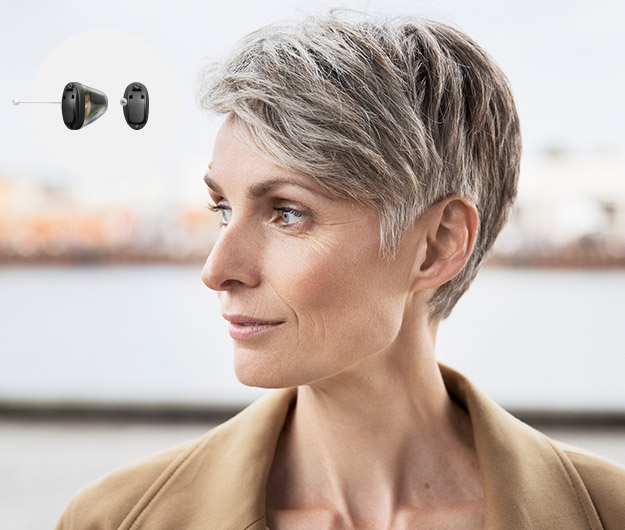
woman wearing a discreet hearing aid device

Did you know?

Today’s hearing aids are more technologically advanced and smaller than ever. 

Some of them are practically invisible and, despite their small size, they offer excellent sound quality - even in difficult listening situations.

Book a FREE hearing test

FAQ about signs and symptoms of hearing loss

male audiologist wearing a suit with a name badge
Written by: Barry Douglas, audiologist
I became an audiologist to help change lives and to show people how hearing aids can greatly improve their quality of life. My work affords me the privilege of meeting, diagnosing, and treating patients of all ages with diverse audiological conditions. Not only that, but I also form life-long relationships with patients who avail of Hidden Hearing's free aftercare services, which is incredibly rewarding.
 

Last reviewed 2025-07-01